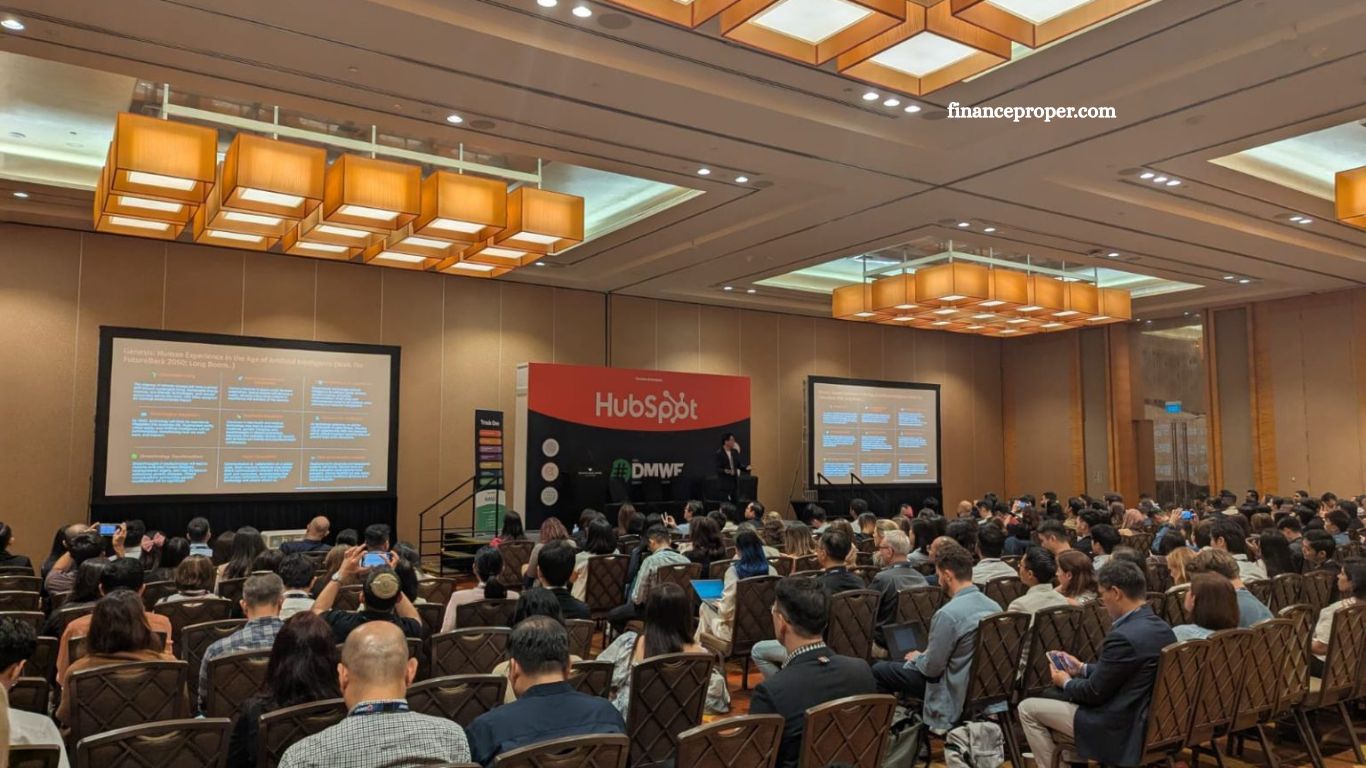

On the first day of the Digital Marketing World Forum (DMWF) Asia 2025, industry leaders explored how AI integration and changing consumer behaviors are reshaping marketing strategies.
- AI-Driven Search Shifts SEO Strategies in APAC
- Frequently Asked Questions
- What is the Large Action Model (LAM)?
- How does LAM differ from traditional segmentation?
- Which industries can benefit from LAM?
- Why is understanding customer behavior important for enterprises?
- How can CIOs and CMOs use LAM?
- Does LAM replace traditional marketing methods?
- What makes LAM effective in today’s digital landscape?
- Conclusion
Held at Marina Bay Sands in Singapore, the opening sessions offered actionable insights on balancing technological innovation with authentic human connection in today’s fast-evolving digital landscape.
AI-Driven Search Shifts SEO Strategies in APAC
Tom Koh, CEO of MediaOne, highlighted the growing impact of zero-click searches on SEO at DMWF Asia 2025. While overall traffic may decline, Koh stressed that search quality remains high.
“Sixty percent of Google searches now result in zero clicks,” he told Marketing Tech. “Those seeking quick summaries aren’t serious buyers. Serious buyers dig deeper, so the traffic may be lower, but it’s more valuable.”
Read More: Short Videos Transforming Digital Marketing in Greater China
Koh underscored the importance of brand authority in AI-driven search results and encouraged marketers to adopt multimodal content strategies rather than relying on a single format. He also noted the rising influence of micro-influencers over macro-influencers, saying trust now comes from relatable recommendations: “Somebody I know looks like my neighbour – if they buy it, I’m more likely to follow.”
Sukanya Das Gupta, senior insights manager for APAC at Blis, called for a shift from micro-moments to macro-meaning in brand strategy. Sharing a QSR case study in Malaysia, she explained, “Firefighting short-term trends isn’t enough; long-term planning drives meaningful growth.” This pivot led to a 73% increase in exposure, eventually stabilizing into a sustainable monthly campaign rhythm.
Das Gupta also emphasized subtle, consistent brand touchpoints over loud, repetitive messaging. “Embed yourselves in soft, subtle nudges. ROI takes time, but so does anything worthwhile,” she said.


Finally, she highlighted the need for cultural sensitivity in APAC marketing. “Western brands often assume US or UK strategies work here—but they don’t. You can’t just transplant campaigns; you have to adapt to local nuances.”
From Search Engine to Search Everywhere: The Evolution of SEO
Judy Tay, Head of Content at First Page Digital, explored the shift from traditional search engine optimization to search experience optimization and now search everywhere optimization. She stressed that SEO metrics must align with business goals.
“Understanding the business needs is number one. If the business wants to see revenue, that should be part of an SEO report,” Tay explained.
Tay also warned against rigid agency approaches. “A red flag is an agency that pushes solutions with no flexibility,” she said. She noted that SEO agencies increasingly act as extensions of clients’ marketing teams, often participating in weekly stand-ups to deliver integrated strategies.
The experts at DMWF Asia 2025 emphasized strategic, culturally relevant, and long-term marketing approaches. As AI continues to reshape search behaviors and consumer expectations, success depends on balancing technological innovation with authentic human connection.
DMWF Asia 2025 continues on February 27 with sessions on influencer marketing, content strategy, and AI applications in digital marketing.
For those interested in learning from global marketing leaders in person, find out more about Digital Marketing World Forum (#DMWF) events in Europe, London, North America, and Singapore.
Frequently Asked Questions
What is the Large Action Model (LAM)?
LAM is NTT’s approach to analyzing the sequence of customer actions to gain deeper insights beyond demographics.
How does LAM differ from traditional segmentation?
Unlike traditional segmentation, LAM focuses on behavioral intent and the order of actions rather than static demographic categories.
Which industries can benefit from LAM?
While developed for marketing, LAM can also support healthcare, energy planning, and any field where timing and sequence matter.
Why is understanding customer behavior important for enterprises?
Behavioral insights enable personalized services, improve engagement, and drive better business outcomes at scale.
How can CIOs and CMOs use LAM?
LAM helps decision-makers tailor strategies by predicting intent and prioritizing customer needs across multiple touchpoints.
Does LAM replace traditional marketing methods?
No—LAM complements existing strategies by adding behavioral sequencing to refine targeting and personalization.
What makes LAM effective in today’s digital landscape?
It adapts to omnichannel behavior, capturing intent across apps, websites, and physical stores for actionable insights.
Conclusion
Enterprises today must move beyond traditional segmentation to understand customers in a dynamic, omnichannel world. NTT’s Large Action Model (LAM) demonstrates how analyzing the sequence of customer actions can uncover deeper insights, enabling personalized strategies that drive engagement and long-term value. By embracing behavior-driven approaches like LAM, businesses can not only enhance marketing outcomes but also apply these insights across industries—from healthcare to energy—ensuring smarter, more impactful decision-making in an increasingly complex digital landscape.