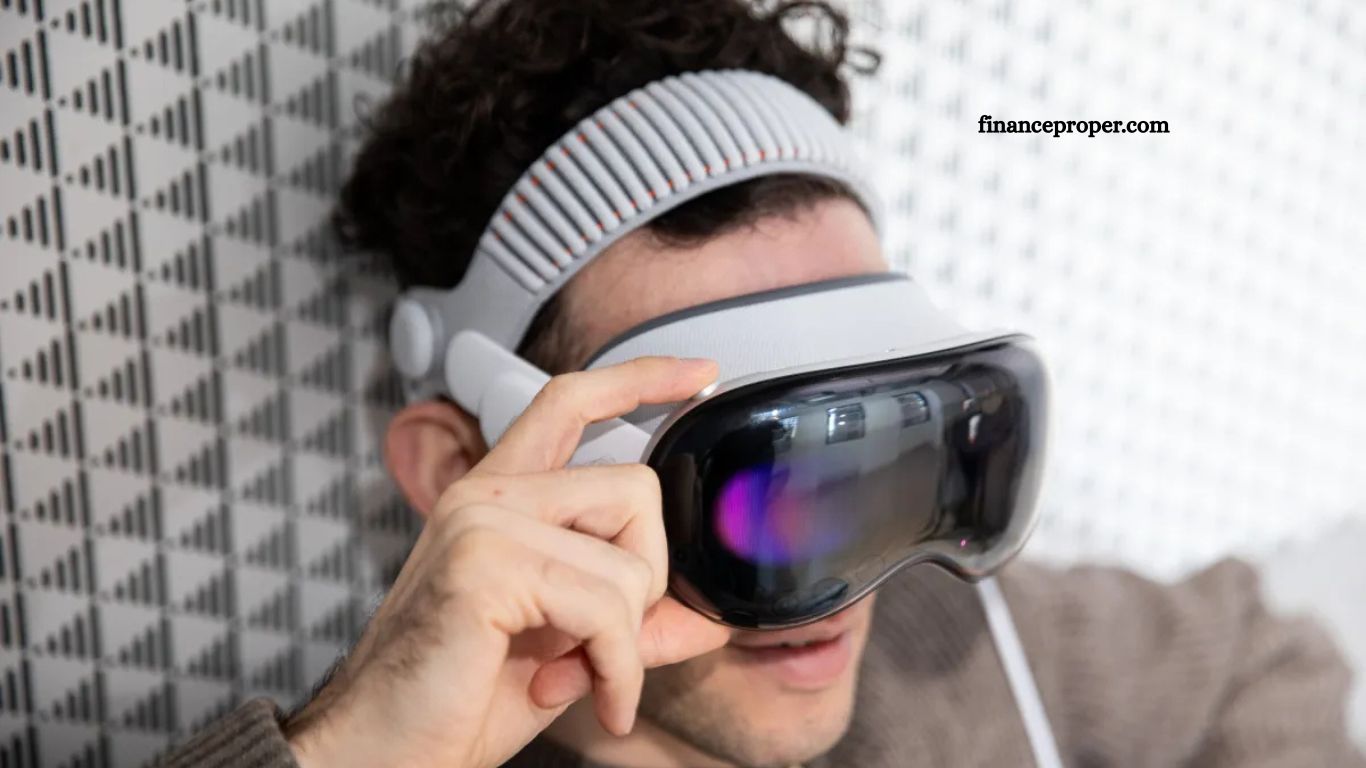

Apple’s Vision Pro continues to lead the VR headset market with unmatched performance and immersive experiences. From exploring 3D photos to watching movies on massive virtual screens and working across floating windows, it delivers moments that feel genuinely magical. Yet, despite these highs, the headset faces a persistent challenge: after using it, I often find myself putting it away and not returning.
The new Vision Pro with the M5 chip improves on the original in speed, comfort, and some hardware refinements. However, it remains a device that requires effort to use—putting on a headset, immersing in a digital environment, and stepping away from the familiar convenience of an iPhone, Mac, or TV. This hurdle underscores a broader challenge for Apple and other VR manufacturers: adoption. Using a VR headset can feel isolating, removing you from the physical world in a way that many users aren’t ready for.
Comfort and Hardware Improvements
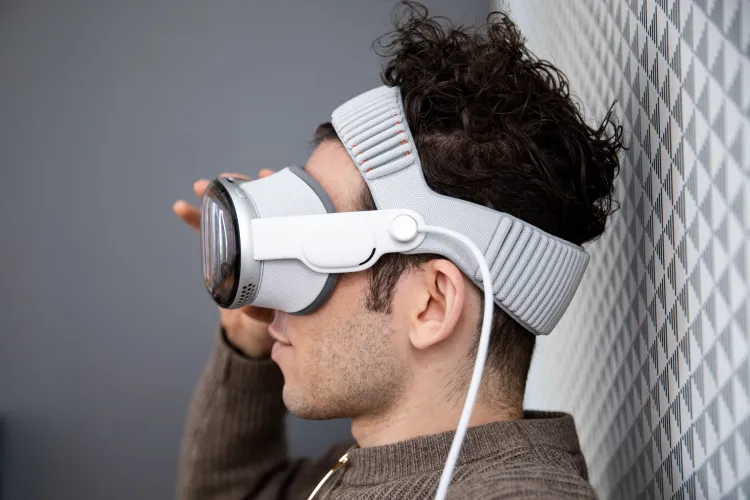
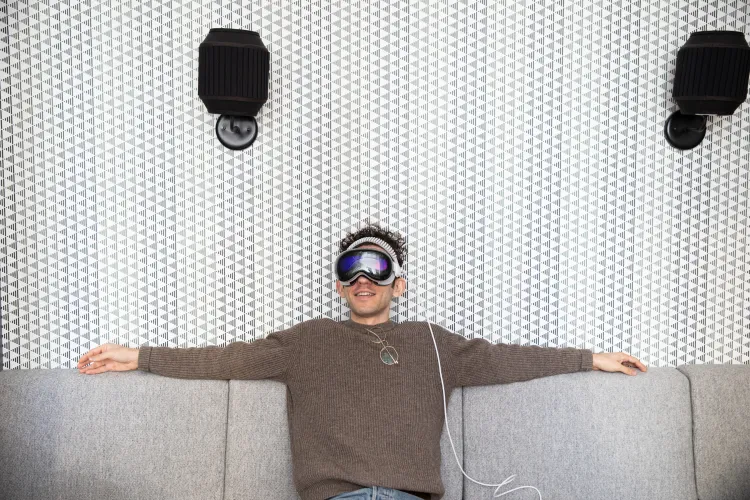
One of the most noticeable upgrades to the Vision Pro is the Dual Knit Band. Unlike the single-band strap of the first version, the new design adds a supportive band across the top of your head and redistributes weight toward the back. This improves balance and reduces the front-heavy feel, making long sessions more comfortable. The strap is adjustable via a single knob with two settings—one for the top of the head, one for the back—creating a clever, user-friendly system.
Internally, the Vision Pro now features Apple’s M5 processor. While the core hardware remains similar to the original, the M5 enables several quality-of-life upgrades. Micro-OLED displays now refresh at 120Hz, improving visual smoothness for rapid head movements or scrolling. Battery life also sees a modest boost: streaming video, such as three episodes of Severance, nearly reaches Apple’s three-hour promise. For regular use—browsing, apps, and light media consumption—battery lasts about two-and-a-half hours.
Read More: Testing Google Pixel Buds 2a on a San Francisco Flight: My Honest Review
Widgets and Immersive Content
Apple has also expanded the headset’s software capabilities. Widgets, introduced since 2024, can now be pinned in physical space around your home. Photos, playlists, or notes can “float” in specific spots, providing quick access when you return to the headset.
Viewing photos remains one of the Vision Pro’s most powerful features. The M5 leverages AI to convert regular 2D images into immersive 3D visuals within seconds. These moments feel deeply personal, bringing loved ones and past memories to life in a way no other device currently matches. For instance, seeing my daughter’s baby photos in 3D is emotionally impactful—a vivid glimpse back in time.
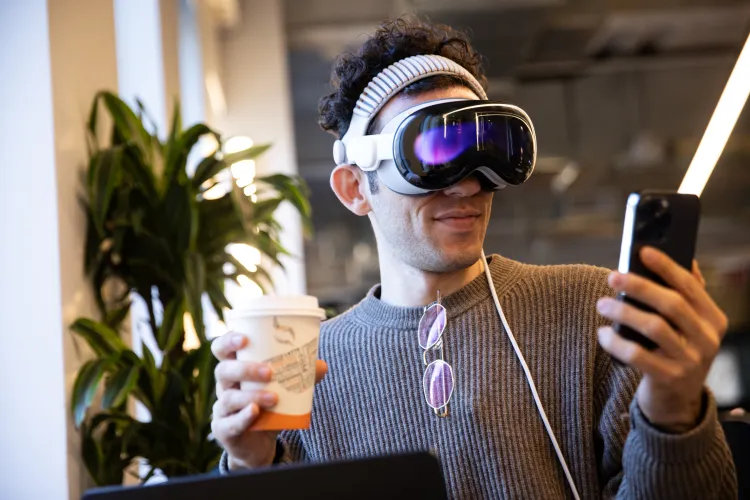
Apple’s immersive video library, though still limited, showcases the headset’s potential. Wildlife, aerial footage, and short documentaries transport users into entirely new environments. While these clips are often brief—ranging from a few minutes to 30 minutes—they demonstrate the headset’s ability to make you feel present in another world. Watching content on a massive, crisp virtual screen with spatial audio is unmatched—but here’s the caveat: it’s more enjoyable with others, and few people have a Vision Pro to share it with.

Enhanced Display and Visual Fidelity
The M5 chip also improves pixel rendering by roughly 10%. While the display resolution hasn’t changed, the headset shows more pixels where your eyes are focused, thanks to foveated rendering. This sharpens text and images in your direct view, enhancing clarity without a noticeable difference in peripheral vision.
Personas—the 3D representations of people—also see improvements in realism. Faces now appear more detailed and lifelike, making interactions feel slightly less isolating. Yet, this improvement is limited when your contacts do not own a Vision Pro, reinforcing the solitary nature of current VR experiences.
Productivity in VR
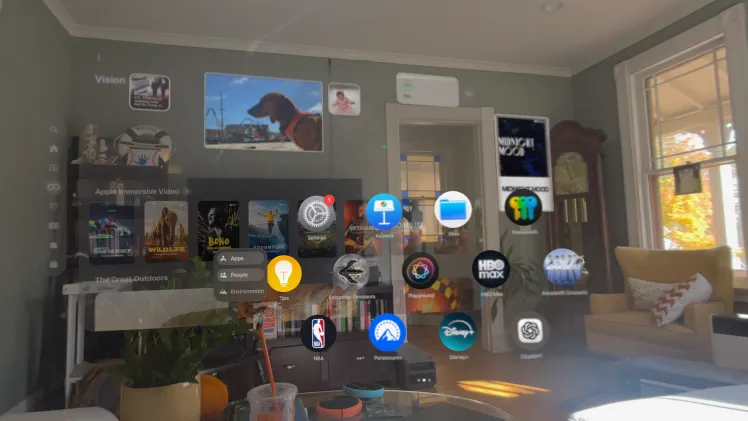
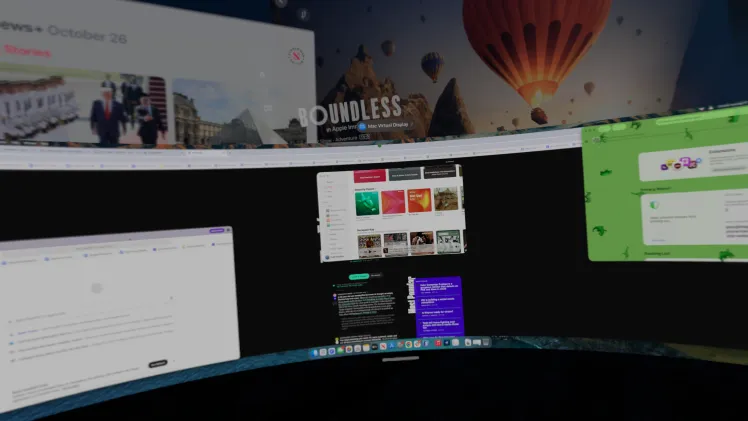
Apple markets the Vision Pro as a serious tool for professionals, and it delivers on that promise. Productivity apps, web browsers, and Office tools work well, allowing users to edit documents, manage tasks, and communicate effectively. The virtual desktop experience enables multitasking across multiple floating windows—a feature that could transform workflows.
However, long sessions in VR are physically and mentally taxing. Wearing a headset for hours can feel claustrophobic, and simple gestures like rubbing your eyes, adjusting your hair, or moving around freely become constrained. Despite its productivity potential, many users may still prefer traditional setups with physical monitors and laptops for extended work.
The Emotional and Social Gap
Even with its technical prowess, the Vision Pro struggles to connect with users emotionally. VR, by nature, isolates the wearer. While immersive, visually stunning, and occasionally magical, it cannot replace the ease and comfort of interacting with the real world. Simple actions—talking to someone face-to-face, checking on pets, or pacing while thinking—remain limited while wearing the device.
Apple has attempted to address this with features like Personas, but these digital representations cannot substitute for real human interactions. Social adoption is further hindered by the device’s high price and limited availability, meaning most users cannot share experiences with friends or family.
The Future of Vision Pro
Apple’s roadmap hints at potential solutions to VR isolation. Upcoming live sports broadcasts, such as NBA games in 2026, promise immersive experiences that may entice users to spend more time in the headset. Still, the company faces a critical challenge: reducing friction between “I’ll watch this in VR” and “I’ll just use my Mac.” Smaller, lighter, and more convenient hardware is likely essential for mainstream adoption.
The Vision Pro M5 delivers improvements in comfort, speed, display quality, and software features, yet the experience remains best suited for short, magical moments rather than sustained use. It’s a glimpse of the future of computing and immersive media—a high-end, premium tool that showcases the potential of VR, but one that hasn’t yet integrated seamlessly into daily life.
Frequently Asked Questions
What is the Apple Vision Pro M5?
The Vision Pro M5 is Apple’s latest VR headset featuring the M5 chip, offering improved speed, display, and comfort.
What are the main improvements in the M5 model?
The M5 version has a faster processor, higher refresh rate (120Hz), better battery life, and a more comfortable Dual Knit Band.
Can the Vision Pro M5 be used for productivity?
Yes, it supports multitasking across apps, virtual desktops, and professional tools like Google Docs, Slack, and browsers.
How long does the battery last on the Vision Pro M5?
Video playback lasts up to three hours, while regular use like browsing and apps lasts around two-and-a-half hours.
Does the Vision Pro M5 feel isolating?
Many users find it immersive but isolating since it blocks out the real world, making social interaction limited.
What makes the Vision Pro M5 good for immersive content?
It converts photos and videos into 3D experiences, with realistic visuals and spatial audio for movies, photos, and short documentaries.
Is the Vision Pro M5 suitable for long-term use?
While excellent for short immersive experiences, long sessions may feel uncomfortable or claustrophobic due to headset weight and isolation.
Conclusion
The Apple Vision Pro M5 is a remarkable leap in VR technology, offering faster performance, improved comfort, and breathtaking immersive experiences. From 3D photos to floating productivity apps, it showcases the potential of virtual reality like few devices can. Yet, despite these advances, it remains a headset that can feel isolating and impractical for long-term or social use. For now, the Vision Pro excels in short, magical bursts of engagement, providing glimpses of a future where computing and entertainment blend seamlessly.