
The Gaza Strip, a narrow coastal enclave of just 140 square miles, has been home to decades of conflict, hardship, and humanitarian crises. Yet in recent years, the worsening blockade, economic collapse, and cycles of violence have brought its population to the brink of famine. For many families, hunger is not a temporary condition but an everyday reality.
- The Human Face of Famine in Gaza
- A Crisis Measured in Numbers
- Why Gaza Faces Famine Today
- Blockade and Restricted Access
- Economic Collapse
- Conflict and Infrastructure Damage
- Climate Change and Agriculture
- Children on the Frontlines of Hunger
- Stories of Survival and Resilience
- The Politics of Aid
- The Role of the International Community
- The Long-Term Cost of Hunger
- Global Solidarity and the Moral Imperative
- FAQs
- What is causing famine in Gaza?
- How many people in Gaza are affected by food insecurity?
- What role do international organizations play in Gaza’s food crisis?
- Are children in Gaza the most vulnerable?
- What can be done to address famine in Gaza long-term?
- Conclusion
Parents tell haunting stories of children who have never tasted fruit, who mistake stale bread for a meal, and who cry themselves to sleep on empty stomachs. The phrase “My youngest child doesn’t know fruit’s taste” has become both a cry of desperation and a symbol of how deeply famine has scarred Gaza’s younger generations.
This article dives deep into the human stories behind Gaza’s famine, the structural causes that fuel food insecurity, the political battles that complicate aid delivery, and the global responsibility to respond. By weaving together first-hand accounts, data from humanitarian organizations, and expert analysis, it paints a picture of both tragedy and resilience in one of the most fragile places on Earth.
The Human Face of Famine in Gaza
Famine is not only measured in calories and statistics; it is lived in the everyday struggles of ordinary people. Families in Gaza describe days where parents sacrifice their portions so their children can eat. Others recount selling personal belongings—jewelry, household items, even clothing—to afford a few pieces of bread.
One mother of four explained in an interview with a humanitarian worker: “My youngest daughter doesn’t know the taste of fruit. She thinks an apple is a sweet she sees on television. When I tried to explain that fruits grow on trees, she didn’t believe me. She asked, ‘If they grow, why don’t we have them?’ I had no answer.”
This single story illustrates how famine is reshaping childhood in Gaza. A generation is growing up malnourished, deprived not only of nutrition but also of basic experiences that children elsewhere take for granted.
A Crisis Measured in Numbers
While stories are vital, the statistics reveal the scale of Gaza’s food insecurity. According to the United Nations World Food Programme (WFP), nearly 80% of Gaza’s population relies on humanitarian aid to survive. The Integrated Food Security Phase Classification (IPC) recently warned that a significant portion of the territory’s residents are in “emergency” or “catastrophe” phases of food insecurity.
Malnutrition among children has risen sharply. UNICEF data shows that nearly one in three children under five in Gaza suffers from chronic malnutrition, with stunted growth, weakened immune systems, and cognitive delays. Anemia, caused by iron deficiency, affects over half of women and children, making pregnancy riskier and childhood development more fragile.


These figures underscore that famine in Gaza is not an abstract possibility but a lived reality.
Why Gaza Faces Famine Today
Blockade and Restricted Access
Since 2007, Gaza has been under a strict blockade imposed by Israel and Egypt, limiting the movement of goods and people. While the stated aim is security, the blockade has crippled Gaza’s economy, devastated its agriculture, and restricted access to essential imports like fertilizers, seeds, and even medical supplies. Farmers are unable to plant efficiently, fishermen are restricted from waters beyond a few nautical miles, and supply chains are fragile.
Economic Collapse
Unemployment in Gaza is among the highest in the world, with estimates hovering around 45% overall and more than 65% among young people. Families simply do not have the income to purchase food even when it is available in markets. Inflation, driven by shortages and reliance on imports, means prices are often out of reach.
Conflict and Infrastructure Damage
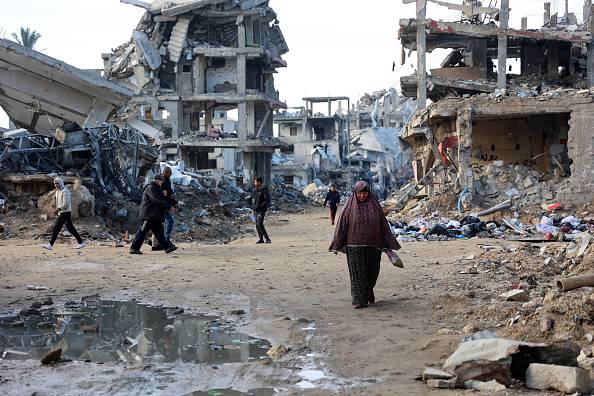
Repeated escalations of violence have damaged farmland, irrigation systems, and power grids. Without stable electricity, food storage becomes impossible, leading to spoilage of what little is available. Water treatment plants have also been bombed or shut down, leaving families with contaminated water, further worsening malnutrition through waterborne diseases.
Climate Change and Agriculture
Climate change has quietly compounded Gaza’s plight. Rising sea levels threaten farmland with salinization, while erratic rainfall patterns make agriculture less predictable. With limited technology and infrastructure, Gaza’s farmers struggle to adapt.
Children on the Frontlines of Hunger
Children are the most vulnerable in famine conditions. Hunger not only affects their physical health but also their psychological development. Teachers in Gaza report classrooms where children struggle to concentrate, often too hungry to follow lessons. One teacher recalled: “I asked a boy why he wasn’t writing in his notebook, and he whispered, ‘Because my hands are shaking. I haven’t eaten since yesterday.’”
This silent suffering is creating a lost generation. Experts warn that if malnutrition persists, Gaza will face long-term consequences, from reduced life expectancy to lower educational outcomes and weakened future economic productivity.
Stories of Survival and Resilience
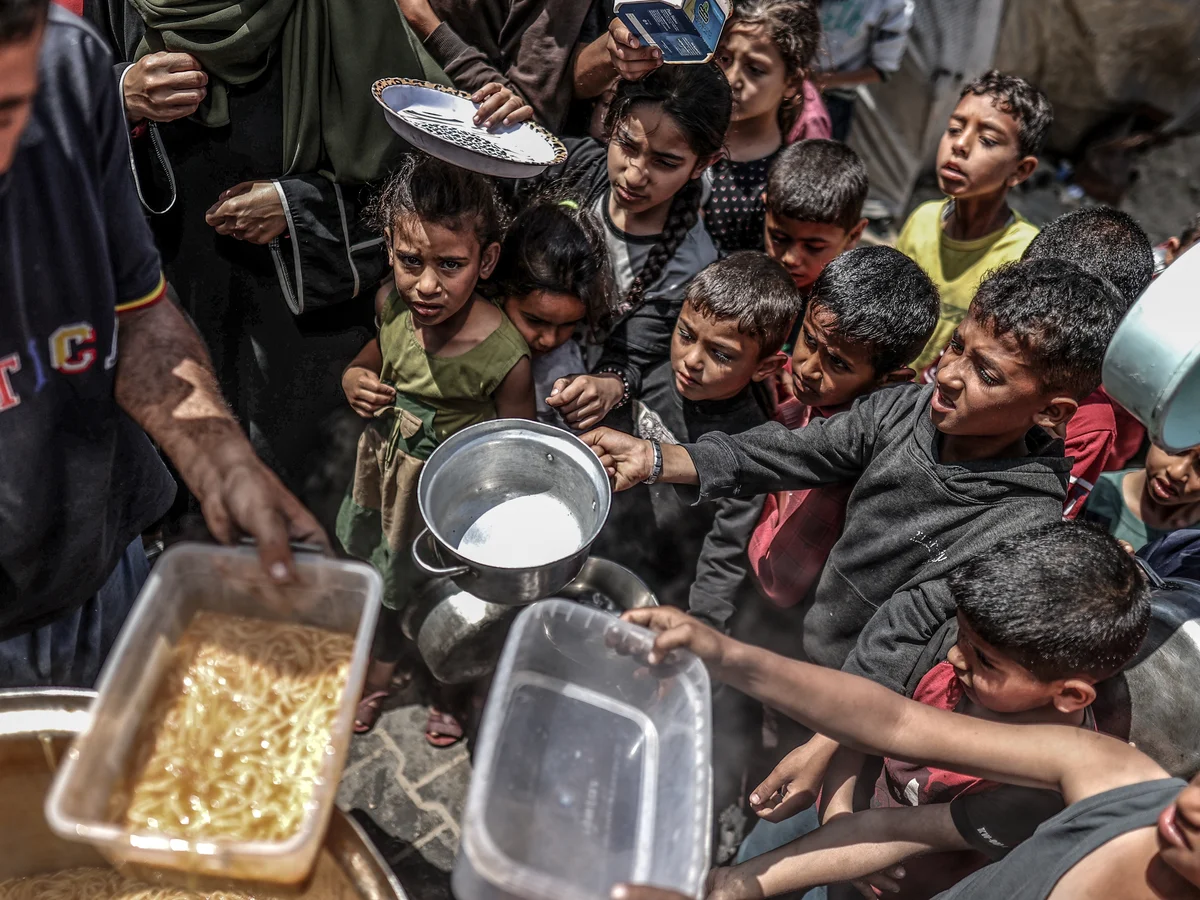
Despite the crushing reality of famine, Gazans show remarkable resilience. Community soup kitchens, often run by local charities, try to provide at least one hot meal a day. Women form informal cooperatives to share whatever little food they have, ensuring no child in the neighborhood goes completely hungry.
A small but inspiring initiative involves rooftop gardening. Some families have turned rooftops into micro-farms, growing tomatoes, cucumbers, and herbs in soil-filled containers. While limited, these gardens provide both nutrition and a sense of dignity, offering children a chance to see fresh produce they otherwise would not.
The Politics of Aid
Delivering food aid to Gaza is an immense challenge. International agencies like the WFP, UNRWA, and various NGOs often face restrictions on entry, bureaucratic delays, and security risks. At times, aid trucks wait at border crossings for days, while food inside spoils.
Political debates also complicate the process. Some countries argue that aid fuels dependency, while others stress that without it, famine would escalate into mass death. As one UN official stated, “This is not about politics. It’s about children eating. Yet every decision about Gaza becomes politicized.”
The Role of the International Community
The international community has a responsibility to respond to famine in Gaza, not only with emergency food aid but with long-term solutions. That includes easing restrictions on agricultural imports, investing in sustainable farming, repairing critical infrastructure, and ensuring humanitarian corridors remain open during conflicts.
Countries around the world have pledged aid, but humanitarian groups often stress that pledges must translate into delivery. As one humanitarian worker put it: “Promises don’t feed children. Actions do.”
The Long-Term Cost of Hunger
Famine in Gaza is not a temporary crisis; it is shaping the future of an entire population. Children growing up malnourished are more likely to face chronic diseases, lower academic performance, and reduced earning potential. In a territory already facing economic collapse, this creates a vicious cycle of poverty and hunger that will be difficult to break.
Experts emphasize that allowing famine to persist in Gaza will not only harm its residents but also destabilize the region further. Hungry populations are more vulnerable to radicalization, and prolonged humanitarian crises erode hopes for peace.
Global Solidarity and the Moral Imperative
Beyond statistics and politics lies a moral question: should any child in the 21st century grow up without knowing the taste of fruit? For many around the world, fruit is a symbol of abundance, health, and childhood joy. For children in Gaza, its absence represents deprivation, loss, and injustice.
Global solidarity is needed not just in words but in collective action. Humanitarian aid must be protected from political disputes, and structural solutions must address the root causes of Gaza’s famine.
FAQs
What is causing famine in Gaza?
Famine in Gaza is driven by a combination of factors including the long-standing blockade, economic collapse, repeated conflict, infrastructure destruction, and the impacts of climate change. These issues have disrupted food production, limited imports, and reduced families’ ability to afford basic nutrition.
How many people in Gaza are affected by food insecurity?
According to the UN and humanitarian agencies, nearly 80% of Gaza’s population depends on aid, with large segments classified as facing “emergency” or “catastrophe” levels of food insecurity. Children and women are disproportionately affected.
What role do international organizations play in Gaza’s food crisis?
Organizations such as UNRWA, the World Food Programme, and NGOs deliver essential food assistance, operate community kitchens, and provide nutritional support to children and mothers. However, their work is often hindered by restrictions, funding shortages, and political disputes.
Are children in Gaza the most vulnerable?
Yes, children face the most severe consequences of famine. Many suffer from malnutrition, stunted growth, anemia, and difficulty concentrating in school. Hunger also impacts their psychological well-being and long-term development.
What can be done to address famine in Gaza long-term?
Long-term solutions require lifting restrictions on agriculture, improving water and electricity infrastructure, supporting local food production, and ensuring humanitarian corridors remain open. International cooperation and investment in Gaza’s economy are also crucial.
Conclusion
The famine in Gaza is not just a humanitarian crisis; it is a test of global conscience. When a mother says her youngest child has never tasted fruit, it is a stark reminder of the human cost of political stalemates and conflict. Beyond the numbers, it is about children losing their childhoods, parents bearing unbearable guilt, and a community struggling to survive under extraordinary pressure.
Addressing famine in Gaza requires urgent humanitarian relief and bold long-term strategies that put human dignity at the center. The world cannot look away as a generation grows up hungry and deprived of life’s most basic joys. Ending this crisis is not only about food—it is about justice, humanity, and the shared responsibility of ensuring that no child, anywhere, grows up without knowing the taste of fruit.