
The report aims to deliver a comprehensive and strongly critical account, presenting what it claims is clear evidence that Israel is committing acts of genocide in Gaza. According to the findings, Israel has violated the 1948 Genocide Convention — a cornerstone of international law established in the aftermath of World War II, driven largely by the Holocaust, in which six million Jews were murdered by Nazi Germany.
- What the UN Report Alleges
- Jeremy Bowen’s Role in the Story
- Israel’s Response to the UN Report
- International Reactions and Divisions
- Expert Opinions on the Genocide Accusations
- The Human Cost of the Conflict
- A Personal Story: One Family’s Struggle
- FAQs
- What is the Genocide Convention, and how is it relevant here?
- What has Jeremy Bowen said about the report?
- Has Israel responded to the genocide accusations?
- What could happen if the accusations are proven?
- Why is proving genocidal intent so difficult?
- Conclusion
Israel has firmly rejected all accusations that its military operations in Gaza breach international humanitarian law or the laws governing armed conflict. Israeli officials maintain that their actions are legitimate acts of self-defense, intended to protect civilians and to pressure for the release of hostages taken by Hamas and Islamic Jihad during the 7 October 2023 attacks — with roughly 20 hostages believed to still be alive.
Israeli authorities have dismissed the UN report as antisemitic propaganda influenced by Hamas. The report was produced by a commission of inquiry formed under the UN Human Rights Council — an institution both Israel and the United States have chosen to boycott, citing a longstanding bias against them.
What the UN Report Alleges
The United Nations commission of inquiry accuses Israel of violating the 1948 Genocide Convention, which defines genocide as acts committed with the intent to destroy, in whole or in part, a national, ethnical, racial, or religious group.
Key Accusations in the Report
Deliberate Destruction of Civil Infrastructure: The report points to targeted or indiscriminate destruction of hospitals, water systems, shelters, and food distribution centers in Gaza.
Incendiary Rhetoric by Leaders: Statements made by Israeli officials — including Prime Minister Benjamin Netanyahu and former Defense Minister Yoav Gallant — are cited as contributing to an environment of incitement and dehumanization.
Blocking of Humanitarian Aid: Israel is accused of systematically restricting the flow of aid, medicine, and essential services into Gaza.
Forcible Displacement of Civilians: The mass displacement of Palestinians is described as not only a consequence of conflict but part of a deliberate strategy that worsens living conditions.


Genocidal Intent: The most serious charge — that actions taken by Israeli authorities go beyond military necessity and show intent to destroy a population group.
These allegations, if upheld in international court, could have far-reaching consequences for both Israel and the norms of international humanitarian law.
Jeremy Bowen’s Role in the Story
Jeremy Bowen is no stranger to the complexities of Middle Eastern conflict. As a veteran BBC correspondent who has covered the region for over three decades, his insights go beyond surface-level reporting. In covering the UN report, Bowen brings journalistic gravity to claims that the world cannot ignore.
Making the Legal Understandable
Bowen’s reports focus not only on the legal arguments but also on the human impact. Through first-hand interviews, on-the-ground footage, and expert commentary, he bridges the gap between legal jargon and the real-life suffering of ordinary people.
He emphasizes that terms like “genocide” are not used lightly in international law — and that their invocation demands a careful, transparent examination of facts, context, and consequences.
Reporting Obstacles and Restrictions
Bowen has also drawn attention to the difficulties journalists face in accessing Gaza. Restrictions imposed by Israeli authorities have made it nearly impossible for foreign correspondents to independently verify many of the events unfolding inside the enclave. This limitation has, in his words, created a “fog of war” that impairs global understanding of the true humanitarian cost.
Israel’s Response to the UN Report
Israel has categorically denied all allegations contained in the UN genocide report. The government contends that:
Military operations are lawful acts of self-defense in response to Hamas’ attacks and rocket fire.
Civilian casualties are an unfortunate result of asymmetric warfare, where militant groups operate from within densely populated areas.
The UN Human Rights Council is biased, and its investigations often fail to account for the threat Israeli citizens face daily from terror groups.
Israeli leaders also argue that the commission’s reliance on statements taken out of context weakens the credibility of the report.
International Reactions and Divisions
The report has deepened existing divides within the international community. Several countries and human rights groups have endorsed the findings, calling for formal investigations by international courts. Others have urged caution, emphasizing the legal necessity of proving intent, the most difficult and essential element in any genocide claim.
Even among allies, political leaders face pressure to balance support for Israel with growing calls for humanitarian accountability.
Expert Opinions on the Genocide Accusations
Legal experts are sharply divided on whether the actions in Gaza meet the high bar for genocide.
Voices Supporting the UN’s Position
Some international law scholars argue that patterns of destruction, combined with explicit statements by political leaders, indicate at least a strong case for genocidal intent.
They emphasize that the systematic targeting of civilian infrastructure cannot be explained away as mere collateral damage.
Counterarguments from Other Experts
Others stress that intent is hard to prove without direct documentation — such as official orders or written policies.
They caution that the term “genocide” should not be diluted, especially in complex conflicts involving asymmetric warfare and non-state actors like Hamas.
The debate is ongoing, but the report has undeniably reframed how many see the conduct of the war in Gaza.
The Human Cost of the Conflict
Beneath the legal arguments and political posturing lies a reality of profound human suffering:
- Tens of thousands killed, including thousands of children.
- More than 80% of Gaza’s population displaced, many multiple times.
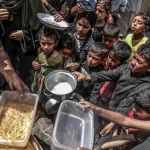
- Critical shortages of medicine, clean water, food, and shelter.
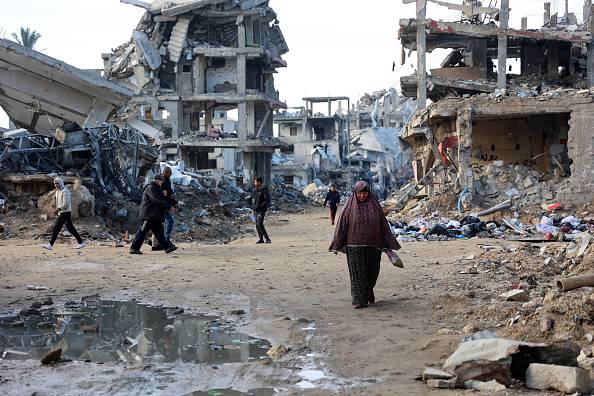
- Destroyed hospitals and schools, leaving civilians with nowhere to turn in emergencies.
Jeremy Bowen has spotlighted these stories in his broadcasts: children born in tents, families digging through rubble for loved ones, doctors performing surgeries without anesthetic. These are the images that, he argues, should guide public understanding of what is happening — not just legal terminology.
A Personal Story: One Family’s Struggle
In one of Bowen’s recent reports, he told the story of a family forced to flee northern Gaza for the third time. Their home destroyed, they now live in a temporary camp with no clean water and almost no food. A newborn baby in the family has never seen a real bed. The father used to work as a schoolteacher; today, he spends his days queuing for rice and sleeping on cardboard.
Bowen does not sensationalize — he simply narrates. His reporting aims to humanize the statistics, showing what war and politics look like when they reach the lives of everyday people.
FAQs
What is the Genocide Convention, and how is it relevant here?
The 1948 Genocide Convention is an international treaty that defines genocide and commits signatories to prevent and punish such acts. The UN report claims that Israel’s conduct in Gaza fits this legal definition based on destruction, displacement, and incendiary rhetoric.
What has Jeremy Bowen said about the report?
Jeremy Bowen has emphasized the seriousness of the report, highlighting both the legal framework and the human stories behind the statistics. He also criticizes the lack of media access to Gaza, which limits independent verification of events.
Has Israel responded to the genocide accusations?
Yes. Israel has strongly denied all accusations, claiming its actions are lawful and taken in self-defense against Hamas. It also accuses the UN of systemic bias and questions the credibility of the report’s sources.
What could happen if the accusations are proven?
Legal consequences could include ICC prosecutions, ICJ rulings, and increased international sanctions. Politically, it could strain Israel’s alliances and affect diplomatic relations with key countries.
Why is proving genocidal intent so difficult?
Under international law, it’s not enough to prove harm — one must prove the intent to destroy a group in whole or in part. This often requires documents, statements, or consistent patterns of behavior that show a deliberate strategy.
Conclusion
The UN’s allegations against Israel are among the most serious a nation can face. Whether one agrees with the findings or not, the report forces a confrontation with uncomfortable truths. The destruction in Gaza is undeniable. The suffering, the displacement, the civilian deaths — all are documented, photographed, and lived.
Jeremy Bowen, through careful reporting, asks the world to confront these realities with open eyes. The challenge now lies not in understanding the report, but in deciding what to do about it. The moral, legal, and humanitarian stakes could not be higher.