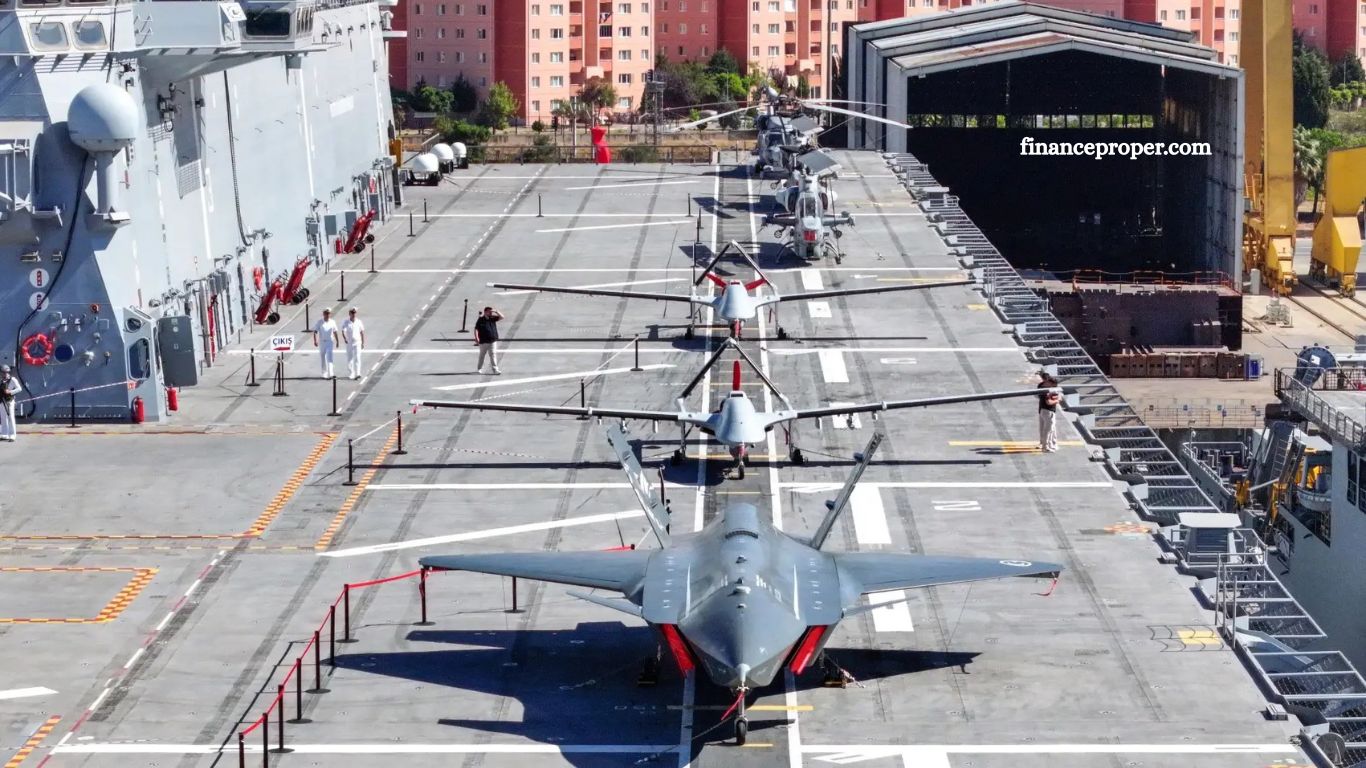

Turkey’s defense industry is set to make significant advancements in 2026, with a strategic focus on cutting-edge technologies such as quantum systems, artificial intelligence (AI), autonomous platforms, and hypersonic capabilities. These efforts aim to strengthen both military and civilian applications, positioning the country as a regional and global technology hub.
- Driving Innovation Through R&D
- Education and Workforce Development
- Expanding International Collaboration and Dual-Use Technologies
- Strengthening Cybersecurity and Digital Defense
- Economic and Strategic Goals
- Frequently Asked Questions
- What are the key technologies Turkey is focusing on in 2026?
- How does Turkey plan to support R&D in the defense sector?
- What programs exist to develop skilled talent for the defense industry?
- How is Turkey promoting international collaboration in defense?
- What is Turkey’s strategy for dual-use technologies?
- How is Turkey addressing cybersecurity needs?
- What are Turkey’s economic and industrial goals for 2026?
- Conclusion
The 2026 Presidential Annual Program outlines extensive support for domestic industrial organizations, emphasizing high-skill employment and investments in defense, homeland security, aviation, and space sectors. Türkiye is prioritizing research and development (R&D) initiatives to accelerate innovation while fostering a skilled workforce capable of meeting the demands of advanced technologies.
Driving Innovation Through R&D
According to Türkiye’s Defense Industry Agency (SSB), four major R&D projects will continue in line with the future roadmap established in 2020. In addition, nine projects leveraging AI are slated for continuation, reinforcing the country’s commitment to artificial intelligence as a core defense capability.
A key milestone includes signing a framework agreement for a quantum technologies development platform, alongside a contract for the design, production, testing, and characterization of quantum processing units (QPUs). These initiatives reflect Türkiye’s ambition to integrate next-generation technologies into both military and civilian sectors, enhancing strategic autonomy and technological competitiveness.
Read More: World Series Game 7: Dodgers vs. Blue Jays – Time, TV Channel, and Streaming Info
Education and Workforce Development
Human capital development remains central to Turkey’s defense strategy. The digital training platform, Defense Development (Savunma Gelişim), will expand its member base and content offerings. In parallel, four competency development programs targeting university students will continue, ensuring a pipeline of highly skilled graduates ready to contribute to the defense industry.
Vocational and technical high school students will benefit from the ongoing ELMAS Program, designed to cultivate early technical expertise. New programs aimed at industry workers are also planned, fostering continuous professional development and industry readiness.
Public awareness initiatives, such as the renowned TEKNOFEST festival, will highlight defense technologies and encourage participation in the sector. Strategic programs, camps, and interactive events are planned to spark interest among young people, with dedicated initiatives for middle school students to cultivate early interest in science, technology, engineering, and mathematics (STEM) fields.



Mentorship programs, online seminars, and school-university collaborations will further nurture young talent, creating a robust talent ecosystem aligned with Türkiye’s technological ambitions.
Expanding International Collaboration and Dual-Use Technologies
Türkiye aims to enhance its international defense presence by hosting cooperation meetings with countries where it has high export potential. Support will also be extended to firms participating in defense exhibitions abroad, promoting Turkish defense technologies on the global stage.
A dual-use strategy is central to the country’s industrialization objectives, seeking to adapt military-grade technologies for civilian applications. The government plans to prepare a dual-use roadmap, facilitating the transfer of tech-intensive products and services from defense to commercial markets. These efforts will be complemented by regular meetings between main contractors and the SSB to align development strategies with industrial capabilities.
Strengthening Cybersecurity and Digital Defense
Cybersecurity remains a top priority, with Türkiye focusing on domestic solutions to meet critical defense needs. Efforts include developing systems capable of managing high data volumes for the Turkish Armed Forces and endpoint security products designed in-country. Zero Trust Network Access (ZTNA) solutions will also be produced domestically to ensure secure and resilient defense networks.
The Turkish Armed Forces Cloud Computing System project will enhance cloud security through indigenous technologies, addressing gaps where domestic alternatives were previously unavailable. The Türkiye Cybersecurity Cluster will spearhead efforts to introduce homegrown cybersecurity solutions to public officials, raising awareness and promoting adoption across government institutions.
Economic and Strategic Goals
Türkiye aims to achieve an 83% domestically produced content rate in defense projects by 2026. The country also targets $8 billion in defense and aviation exports, supported by a sector turnover of $20 billion. These initiatives are expected to generate approximately 120,000 new jobs, further cementing the defense industry as a major driver of economic growth and technological innovation.
The 2026 program underscores the Turkish government’s commitment to integrating advanced technologies, fostering a skilled workforce, and enhancing both domestic and international defense capabilities. By emphasizing AI, quantum technologies, autonomous systems, and hypersonic innovations, Türkiye is poised to achieve a balanced and sustainable growth trajectory in its defense and civilian technology sectors.
Frequently Asked Questions
What are the key technologies Turkey is focusing on in 2026?
Turkey will prioritize artificial intelligence (AI), quantum technologies, autonomous systems, and hypersonic capabilities for both military and civilian applications.
How does Turkey plan to support R&D in the defense sector?
The government will continue major R&D projects aligned with the Defense Industry Agency (SSB) roadmap, including nine AI-based initiatives and quantum technology programs.
What programs exist to develop skilled talent for the defense industry?
Digital platforms like Defense Development (Savunma Gelişim), university competency programs, the ELMAS Program for high school students, and mentorship initiatives aim to cultivate skilled professionals.
How is Turkey promoting international collaboration in defense?
Defense industry cooperation meetings will be held with countries with high export potential, alongside support for Turkish firms participating in international defense exhibitions.
What is Turkey’s strategy for dual-use technologies?
The country aims to adapt military-grade technologies for civilian use through a dual-use roadmap, promoting tech-intensive products across commercial and defense sectors.
How is Turkey addressing cybersecurity needs?
Domestic solutions, including high-data systems for the Armed Forces, endpoint security products, ZTNA solutions, and the Turkish Armed Forces Cloud Computing System, are being developed to strengthen digital defense.
What are Turkey’s economic and industrial goals for 2026?
Targets include an 83% domestic production rate in defense, $8 billion in exports, a $20 billion sector turnover, and the creation of 120,000 jobs.
Conclusion
Turkey’s 2026 defense strategy demonstrates a clear commitment to technological advancement, workforce development, and global competitiveness. By prioritizing artificial intelligence, quantum technologies, autonomous systems, and hypersonic innovations, the country aims to strengthen both military capabilities and civilian applications. Investments in R&D, education programs, cybersecurity, and international collaborations are designed to foster a skilled workforce, promote domestic production, and boost exports.